
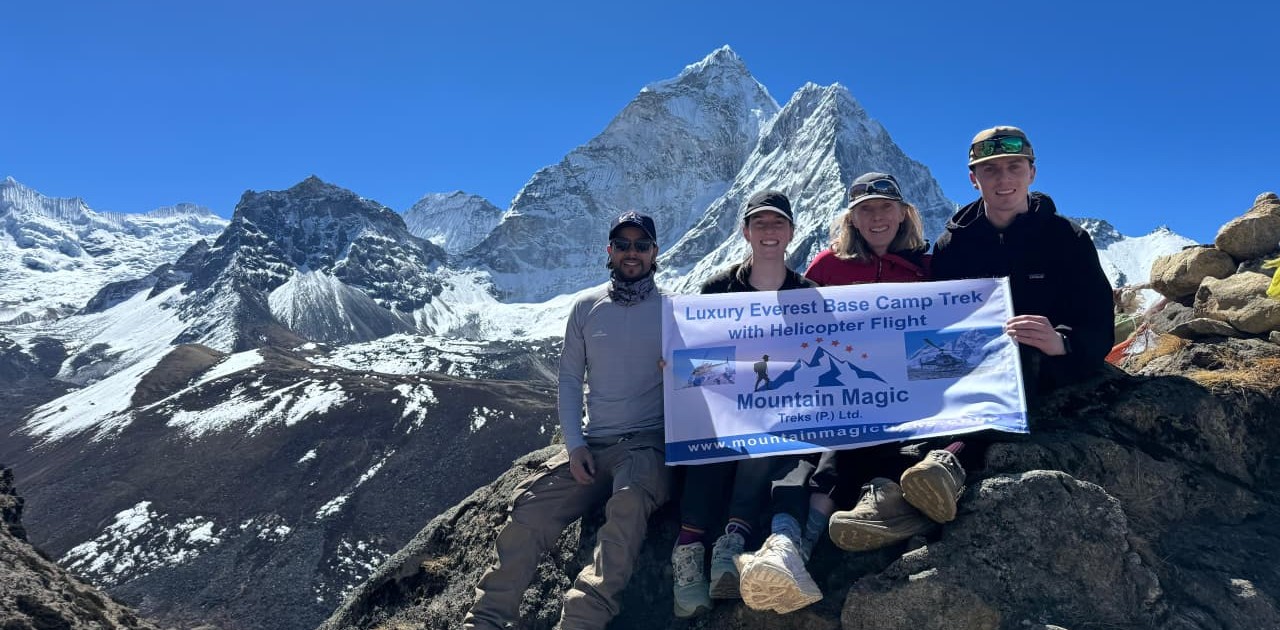
Some mountain journeys are about reaching a destination. Others are about everything you discover before you get there. The Everest region belongs to the second kind.
The Everest Base Camp Trek with helicopter return lets travelers experience the Khumbu on foot before finishing the adventure in the air. Along the way, the journey brings together mountain scenery, local traditions, peaceful villages, and moments that feel far removed from everyday life.
See the Khumbu Through Its Everyday Details
The beauty of the Everest region is not limited to huge peaks. Look closer and you will find details that tell the story of mountain life.
Old stone walls line parts of the trail. Prayer flags move in the wind. Small bridges connect valleys, while local homes and tea houses sit against the mountain slopes.
Notice the Trail Markers
You may see painted stones, signs, prayer wheels, and other markers while walking. These details can make the route feel more connected to the communities that have used these paths for generations.
Instead of simply counting the hours until the next stop, take time to notice what surrounds you.
Discover How the Landscape Tells a Story
The scenery does not change all at once. It develops gradually as you move deeper into the Everest region.
Green areas, wooded sections, open valleys, rocky ground, and high mountain surroundings appear at different points of the journey.
This gradual transformation makes the trek interesting because the trail never feels exactly the same from one day to the next.
Make Your Walking Time More Enjoyable
Long walking days give you plenty of time to think, talk, and observe.
If you are traveling with friends, conversations can make the hours pass quickly. If you are traveling alone, the trail can offer rare moments of quiet.
Use the Trail as a Break From Routine
You do not need to fill every moment with music or phone notifications.
Listen to the sound of rivers, footsteps, wind, or distant village activity. A little silence can become one of the most refreshing parts of the trip.
Explore the Taste of the Mountains
Food is another part of the travel experience that deserves attention.
Meals along the trail are generally simple and practical. Warm dishes can feel especially satisfying after spending hours outside.
Rice, noodles, soups, vegetables, eggs, bread, and other common trekking foods can help provide energy during the journey.
Carry a Few Favorite Snacks
A small supply of familiar snacks can be useful during long stretches between meals.
Choose items that travel well and do not take up too much room. They can also be helpful when you want something quick during a walking break.
Give Yourself Time in the Villages
It is easy to think of villages as places where you simply stop for the night. Try to see them differently.
Walk around when time allows. Look at the local architecture, visit small shops, and observe the rhythm of daily life.
The Everest Base Camp Trek with helicopter return becomes more meaningful when the villages are treated as part of the experience rather than just points on a map.
Learn From Your Guide
A local guide can add another layer to the trek.
Instead of only showing you which direction to walk, a knowledgeable guide may explain local customs, landmarks, traditions, and stories connected with the region.
Ask Questions
Do not hesitate to ask about things you notice.
You might learn why certain buildings are designed in a particular way, what a local symbol means, or how people manage everyday life in such a challenging environment.
These conversations can make the journey feel more personal.
Respect the Quiet Places
The Everest region includes religious and cultural sites that are important to local communities.
When visiting monasteries, prayer areas, or other sacred places, keep your behavior respectful. Follow posted instructions and listen to your guide.
A respectful visitor does not need to understand every tradition to appreciate its importance.
Make Your Photos More Meaningful
You will probably take many photographs during the trek. Instead of photographing everything, try looking for moments that tell a story.
A small village at sunrise, a trail disappearing around a hillside, prayer flags against the sky, or a quiet tea house can sometimes create stronger memories than another photograph of a mountain peak.
The goal is to capture how the journey felt, not just what it looked like.
Keep Your Expectations Realistic
No trekking experience is completely predictable.
You may have a day when you feel strong and another when the same distance feels much harder. Weather can also change your plans.
The best approach is to accept that mountain travel has its own rhythm.
Be Patient With Changes
The helicopter return is also affected by weather and operating conditions. A delay does not mean the trip has gone wrong.
Stay in contact with your trekking team and allow reasonable flexibility in your schedule.
Experience the Final Flight Differently
After walking through the region for days, a helicopter journey can feel almost surreal.
From above, familiar places become part of a much wider landscape. Trails that seemed long on foot may look tiny, while valleys and mountain ridges reveal their full scale.
This is one of the special features of the Everest Base Camp Trek with helicopter return.
Leave the Region Better Than You Found It
Responsible travel does not require complicated actions.
Use reusable bottles when possible, avoid dropping waste, respect local property, and follow the rules of the places you visit.
Even small choices matter in a fragile mountain environment where waste management and resources can be challenging.
Final Thoughts
The Everest Base Camp Trek with helicopter return offers more than a route to one famous destination. It gives travelers time to experience the Khumbu through its landscapes, villages, food, traditions, and people.
The helicopter flight then adds a completely different perspective to the final part of the adventure.
Prepare carefully, remain flexible, and stay curious throughout the journey. If you slow down enough to notice the small things, your Everest experience can become far more memorable than simply reaching Base Camp.
Frequently Asked Questions
What can I experience besides mountain views?
You can experience village life, local food, traditional architecture, monasteries, prayer flags, suspension bridges, and the everyday culture of the Everest region.
Why is a local guide useful?
A guide can help with navigation while also sharing information about local customs, landmarks, and the communities along the route.
How can I make long walking days easier?
Maintain a steady pace, take sensible breaks, stay hydrated, eat regularly, and avoid using too much energy early in the day.
Should I carry snacks?
Yes. A few lightweight snacks can be useful when you need quick energy between meals.
Can weather change the helicopter return?
Yes. Helicopter operations depend on suitable weather and flying conditions. Delays or schedule changes are possible.
Is the Everest Base Camp Trek with helicopter return suitable for someone who wants cultural experiences?
Yes. The trek passes through communities and areas where travelers can observe local traditions and mountain life alongside the natural scenery.
What should I remember most from the trek?
Do not focus only on reaching Everest Base Camp. The people you meet, villages you visit, quiet moments on the trail, and changing landscapes can become just as important as the destination.